Most people don’t fail at healthy eating because they lack discipline.
They fail because the advice they follow is unrealistic.
Cut out sugar. Avoid carbs. No fast food. No snacks.
It sounds simple—but it doesn’t last.
Real life gets in the way. You’re busy, you’re tired, you go out with friends, or you just want food you actually enjoy. One “bad” meal turns into a bad day, then a bad weekend… and suddenly you’re starting over again on Monday.
If that cycle sounds familiar, you’re not the problem—the approach is.
Why Most Diets Fail
The biggest issue with most diets is all-or-nothing thinking.
You’re either:
- Eating perfectly
- Or completely off track
There’s no middle ground—and that’s the problem.
Because no one eats perfectly all the time—and you don’t need to.
Extreme restrictions often lead to:
- Cravings
- Low energy
- Frustration
- Burnout
Eventually, people quit—not because they don’t care, but because the plan wasn’t sustainable.
The Smarter Approach: Balance, Not Restriction
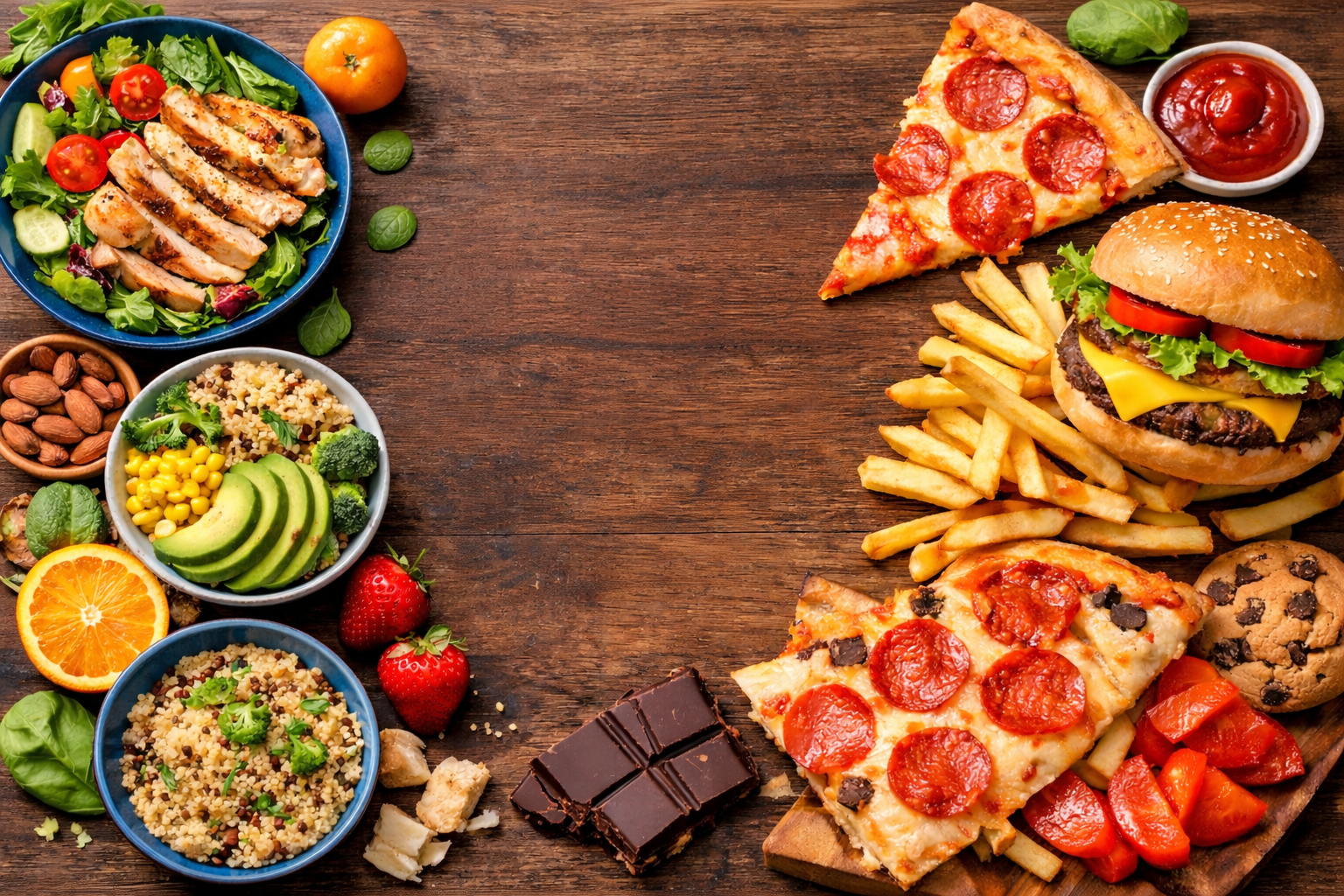
Healthy eating isn’t about removing foods—it’s about managing them better.
You don’t need to give up:
- Pizza
- Burgers
- Pasta
- Desserts
Instead, focus on:
1. Portion Control
Eat less—not never.
2. Frequency
Enjoy treats occasionally, not daily.
3. Balance
Pair indulgent foods with healthier choices.
Real-Life Examples of Balanced Eating
- Having pizza? Add vegetables or a salad
- Craving dessert? Enjoy a smaller portion
- Eating out? Keep other meals lighter
- Want fast food? Have it occasionally, not daily
This approach helps you stay consistent without feeling restricted.
What a Balanced Day of Eating Looks Like
Here’s a simple example of realistic, healthy eating:
Breakfast:
Eggs on toast with fruit
Lunch:
Chicken, rice, and vegetables
Dinner:
Pasta with protein and a side salad
Snack:
Yogurt, fruit, nuts, or a small dessert
A Simple Healthy Eating Formula
Use this easy structure for any meal:
- 50% Vegetables
- 25% Protein
- 25% Carbohydrates
This keeps meals balanced without complicated rules or calorie counting.
Healthy Food Swaps That Work
Small changes can make a big difference:
- Fried foods → grilled or baked
- Sugary drinks → water or sparkling water
- White bread → whole grain
- Chips → nuts or fruit
How to Eat Healthy on Busy Days
When life gets hectic, focus on convenience and nutrition:
- Choose meals with protein + vegetables
- Keep quick foods at home (eggs, yogurt, frozen meals)
- Go for “better” instead of perfect
Common Healthy Eating Mistakes
Avoid these common traps:
- Trying to be perfect
- Over-restricting foods
- Starting over after one bad meal
- Skipping meals to compensate
- Overcomplicating your diet
How to Start Eating Healthy (Simple Plan)
- Don’t cut out your favorite foods
- Add one healthy item to each meal
- Focus on consistency, not perfection
- Make one small change at a time
Make Healthy Eating Fit Your Lifestyle
The best diet is the one you can maintain.
That means:
- Eating foods you enjoy
- Staying flexible in social situations
- Avoiding guilt around food
If it feels sustainable, it will last.
Final Thoughts
You don’t have to choose between being healthy and enjoying food.
The key is learning how to balance both.
When you stop chasing perfection and start focusing on consistency, healthy eating becomes easier—and more sustainable.